
Why People Don’t Reply to Your Emails (And Why It’s Not What You Think)
You think people are ignoring you. They’re not.
You send a message. It’s clear. It’s polite. It makes sense.
And then nothing happens.
No reply. No update. No “got it.” Just silence.
So you assume the obvious:
They’re not interested
They didn’t like your message
You said something wrong
But most of the time, none of that is true.
People don’t reply for simpler reasons.
And once you understand those reasons, your whole approach to email changes.
The default assumption is wrong
When someone doesn’t reply, most people take it personally.
They think:
“If they were interested, they would have replied.”
That sounds logical. But it doesn’t match how people actually behave.
In reality:
People miss emails
People delay decisions
People get distracted
People forget
And most importantly:
People don’t treat your email as a priority the way you do
That doesn’t mean your email is bad.
It means their attention is limited.
What email look like from the other side?
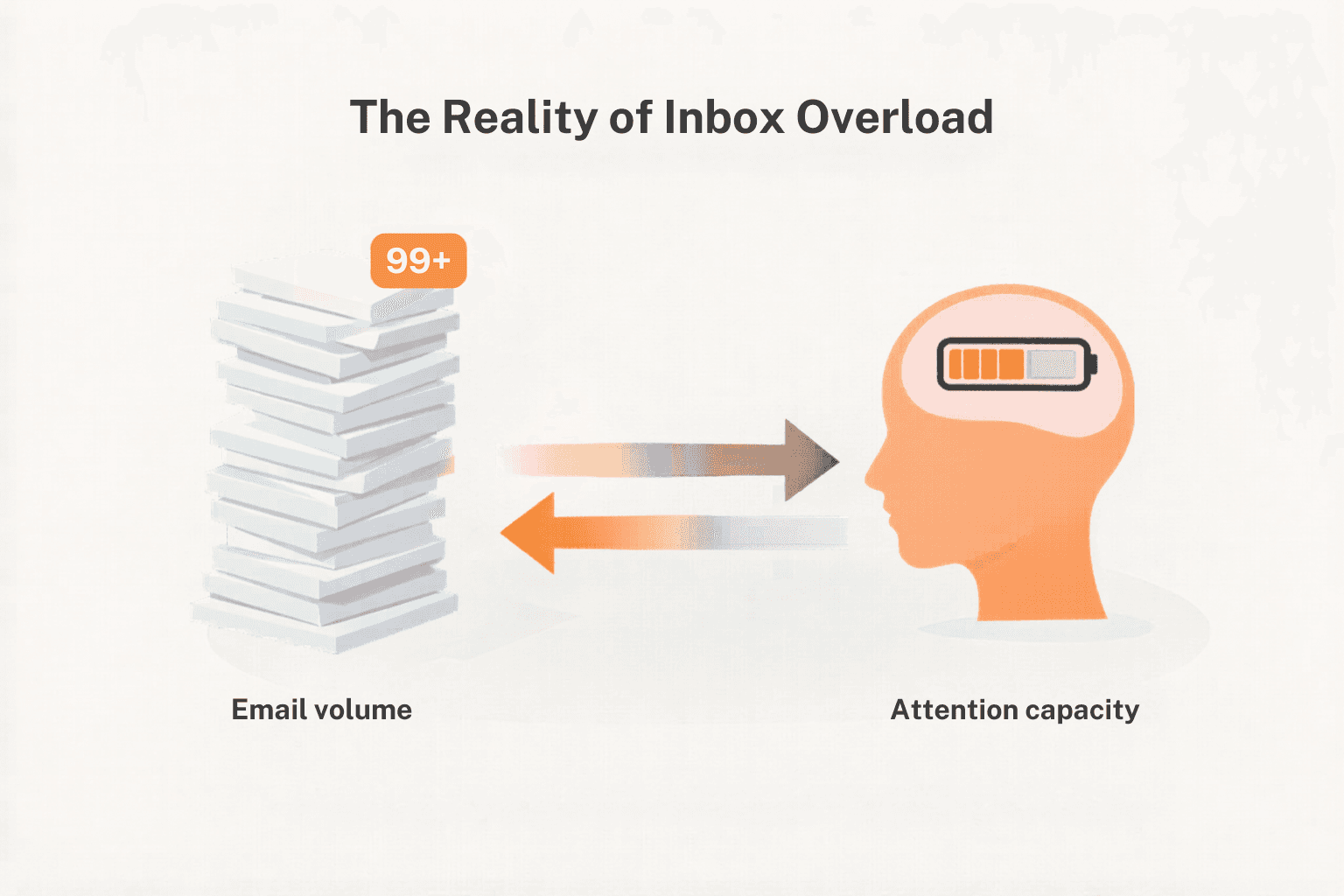
Before we go deeper, it helps to understand what your email is competing with.
Most professionals deal with:
80–120 emails per day
Constant notifications
Back-to-back meetings
Shifting priorities
Even Microsoft’s research shows that email is one of the most overloaded parts of the workday.
So when your message arrives, it doesn’t land in a quiet space.
It lands in a crowded system.
That changes everything.
The real reasons people don’t reply
When someone doesn’t reply, it’s easy to assume the worst.
But most of the time, nothing dramatic happened.
Your email didn’t fail. It just didn’t get attention at the right moment.
Let’s break this down properly.
Not assumptions. Actual reasons.
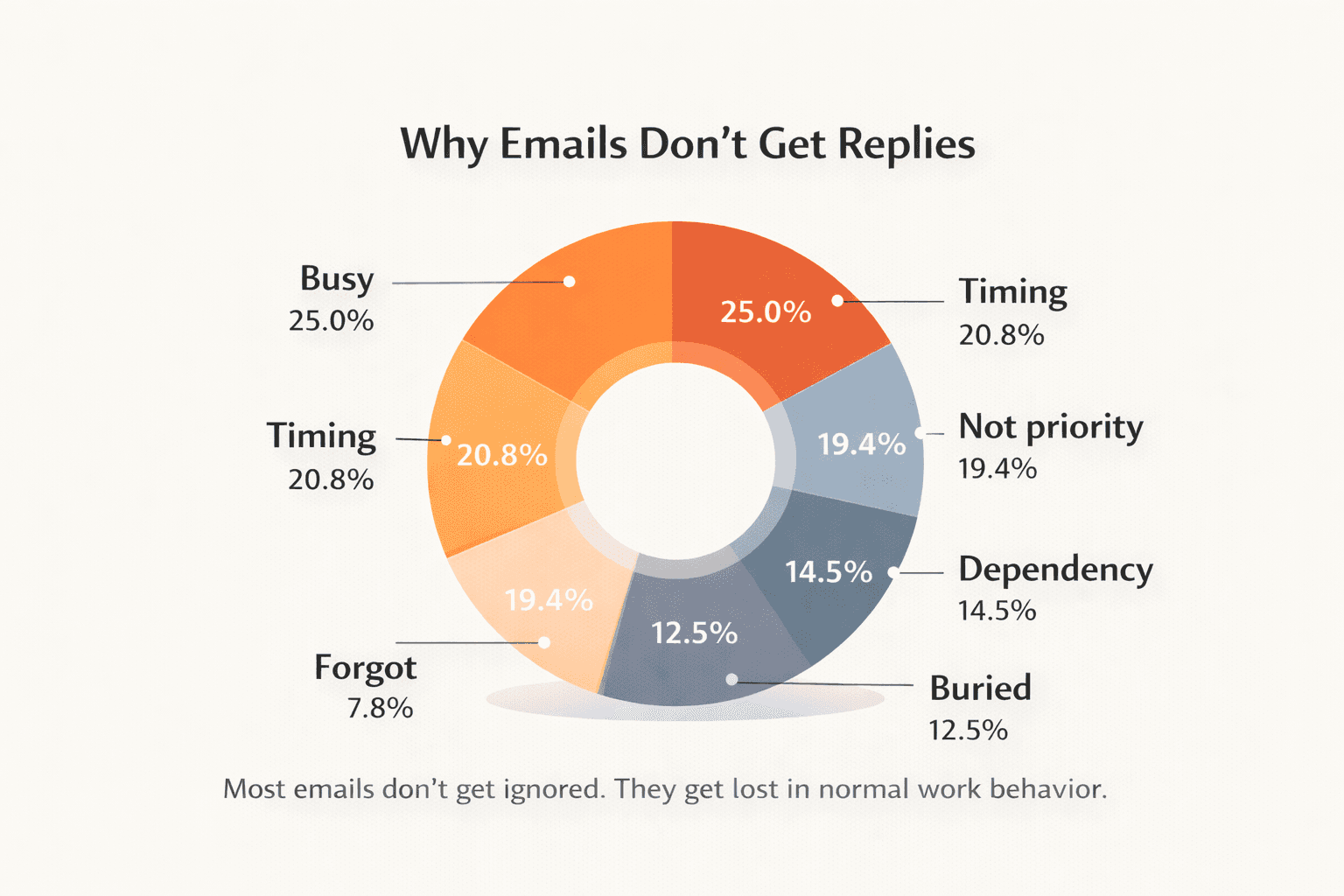
1. They saw it at the wrong time
This is the most common reason.
They opened your email when:
They were in a meeting
They were about to switch tasks
They were scanning quickly
They thought:
“I’ll reply later.”
They didn’t.
That’s it.
2. It wasn’t urgent
Your email might be important.
But it’s not urgent for them.
So it gets pushed down by:
Deadlines
Internal work
Other conversations
And by the time they come back, your email is buried.
3. They need time to decide
Some emails require thinking.
Examples:
Proposals
Pricing discussions
Hiring decisions
Partnerships
These don’t get instant replies.
They sit in the “decide later” category.
And that category is dangerous.
Because “later” often becomes “forgotten.”
4. They depend on someone else
Many replies are blocked by internal steps.
They need to:
Check with a manager
Confirm budget
Align with a team
Get approval
Until that happens, your email stays pending.
And they don’t always update you while waiting.
5. Your email got buried
This is simple.
New emails came in.
Yours moved down.
Out of sight → out of mind.
6. They forgot
Not intentionally.
Just realistically.
People forget things that are not structured.
Why people misread silence
Now here’s the real issue.
It’s not that people don’t reply.
It’s how you interpret it.
Most people treat silence as a decision.
“They didn’t reply, so they’re not interested.”
But silence is not a decision.
It’s a lack of action.
And those two things are very different.
A simple example
You send a proposal.
No reply for 3 days.
You assume:
“They’re not interested.”
Reality:
They read it
They planned to review it later
They got busy
They forgot
The deal didn’t fail.
It just wasn’t followed up.
This is where most opportunities are lost
Not at the first email.
Not in the meeting.
Not in pricing.
But here:
between “no reply” and “no follow-up.”
That gap is where deals disappear.
Why follow-ups actually work?
Follow-ups don’t work because they are clever.
They work because they restore visibility.
That’s it.
They bring your email back to the top.
They give the other person another chance to act.
And that’s often all that’s needed.
Data supports this
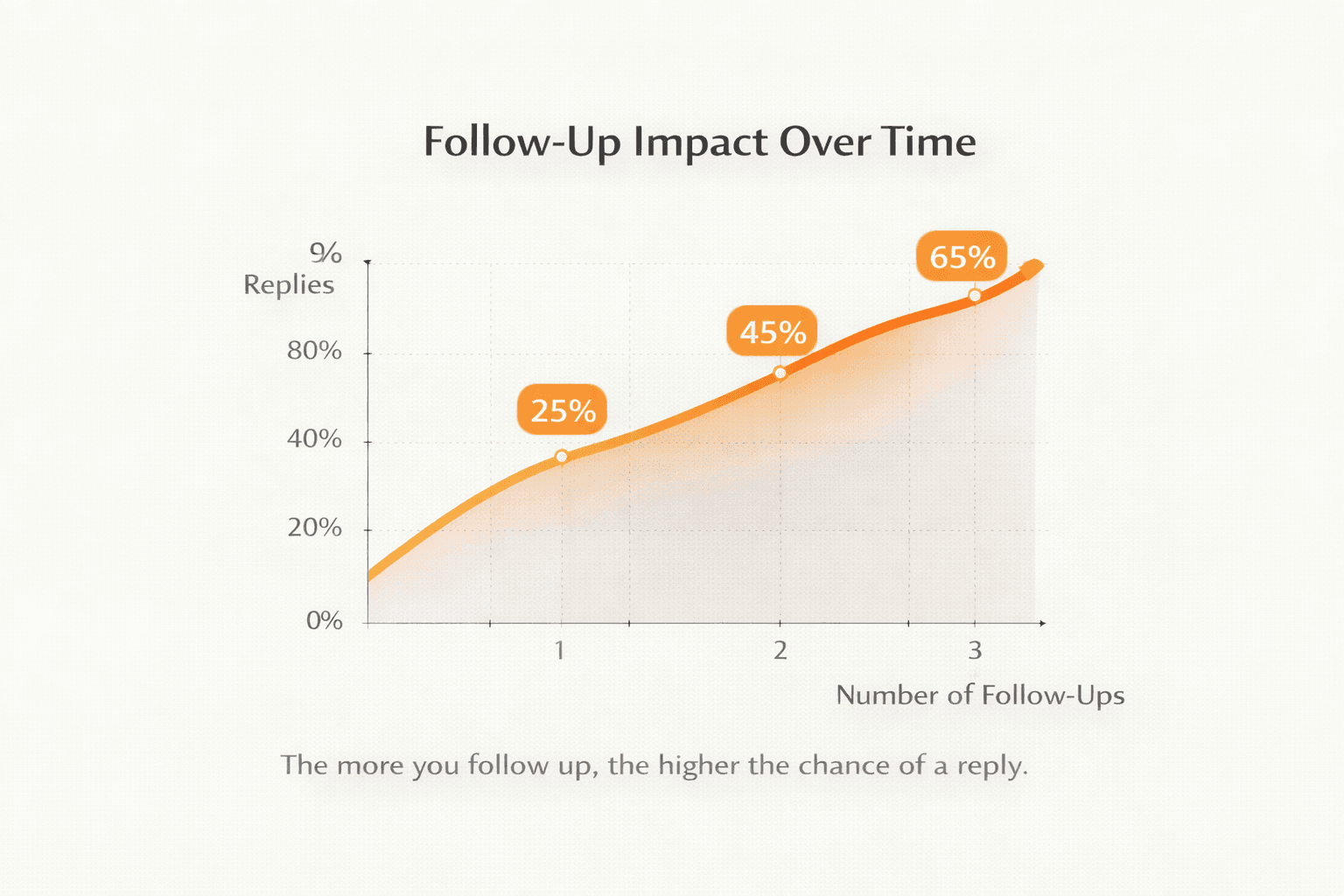
Studies across outreach and sales consistently show:
Adding even one follow-up increases reply rates
Multiple follow-ups increase the chances of a response
Most replies happen after the first message
This doesn’t mean you should spam people.
It means:
One message is rarely enough
This is the shift you need
Instead of thinking:
“Did they like my email?”
Think:
“Did they see it at the right time?”
Because timing matters more than wording.
You don’t need better emails
This is where most advice goes wrong.
People focus on:
Subjects
Templates
Tone
But that’s not the main issue.
You don’t need:
Better writing
More persuasive wording
You need:
Better timing
Consistent follow-up
If you want to understand how missed follow-ups actually turn into lost opportunities, read this:
Most Deals Don’t Fail — They’re Lost Due to Poor Email Follow-Ups
It explains what happens after silence when no one takes action.
The real problem is not awareness
Most people already know they should follow up.
They just don’t do it consistently.
Why?
Because:
They don’t track emails
They don’t set follow-ups
They rely on memory
They get distracted
This is not a knowledge problem.
It’s a system problem.
Why consistency is hard
Let’s be honest.
Following up is not difficult.
But doing it consistently is.
Because:
It’s not urgent
It’s easy to delay
It requires effort
It’s not tracked
So it gets skipped.
And that’s where things break
Not in the first message.
But in the follow-through.
The system gap
Here’s the real issue:
Email has no built-in follow-up system.
You send an email.
And then:
No tracking
No reminder
No next step
Everything depends on you.
That’s not reliable.
If you want a simple way to handle this without overcomplicating things, you can use this:
The 3-Rule Follow-Up System (For Busy Professionals)
It gives you a clear structure to follow without needing heavy tools.
Where Recaly fits in?
At some point, manual follow-up breaks.
Especially when:
Conversations increase
Inbox gets crowded
Tracking becomes messy
That’s where tools can help.
Recaly is built for this exact problem.
Not to replace your workflow.
But to support it.
It helps you:
Identify emails that need follow-up
Remind you at the right time
Reduce the effort to send the next message
Simple things.
But they make a big difference.

What should you do next?
Start simple.
Don’t overthink it.
1. Stop assuming silence means no
Treat it as incomplete.
2. Follow up at least once
Most people don’t.
That alone puts you ahead.
3. Keep it short
You don’t need perfect wording.
4. Track important emails
Even a basic system helps.
5. Review your sent emails weekly
You’ll find missed opportunities.
Final thought
Most people think email is about communication.
It’s not.
It’s about continuation.
Starting a conversation is easy.
Keeping it alive is the real work.
And most opportunities are lost not because they were rejected.
But because they were not continued.
CTA
If this sounds familiar, you don’t need to change everything.
Start small.
Follow up on the emails that matter.
Use a simple system.
And if you want help doing this without tracking everything manually, you can try Recaly.
It’s built for people who rely on email and don’t want to lose conversations just because they forgot to follow up.