The 3-Rule Follow-Up System (For Busy Professionals)
Most professionals assume deals are lost because of pricing, competition, or timing.
In reality, a significant portion of opportunities are lost for a much simpler reason: no follow-up.
They fail because work gets busy, inboxes fill up, and the message never gets sent. That matters more than most people think.
Research often cited in sales and email workflow studies shows that many deals need several follow-ups before they move forward, yet a large share of people stop after the first one.
HubSpot’s 2026 roundup, citing Invesp and Belkin's data, says:
Around 80% of deals require at least 5 follow-ups to close
Nearly 44% of professionals stop after just one follow-up
A large percentage of emails go unanswered simply due to timing, not lack of interest
This gap between intent and execution creates what can be called opportunity leakage.
In this article, you’ll learn a simple, practical system designed for busy professionals who rely on email daily, without requiring complex tools, CRMs, or automation setups.
Why does follow-up break down?
Email remains the default communication layer for:
Client conversations
Hiring processes
Sales and partnerships
Investor outreach
However, email also has a structural limitation:
It does not track intent.
Once an email is sent:
There is no built-in mechanism to ensure follow-up
Conversations depend on memory and manual effort
Important threads get buried under new messages
Common Failure Points
Most people already know how to send a decent follow-up. What they struggle with is remembering who needs one, when to send it, and how to keep the process moving when their inbox gets crowded.
That is why reminders alone rarely solve it. A reminder only helps if you set it, notice it, and act on it. Most people do not do that consistently.
There is also a timing problem. Gmelius reports that 90% of emails that get a reply do so within two days, which means timing matters more than people think. If a thread goes quiet and you do nothing, your chances usually drop fast.
A quick inbox check
To understand the scale of this issue, try a quick audit:
Open your “Sent” folder
Review your last 20–30 emails
Identify conversations that required a follow-up
Now answer:
How many follow-ups were actually sent?
How many conversations stopped without a response?
In most cases, you will find that a meaningful portion of opportunities were not actively closed, and they simply faded.
Why Traditional Solutions Fall Short
Many professionals attempt to solve this problem using:
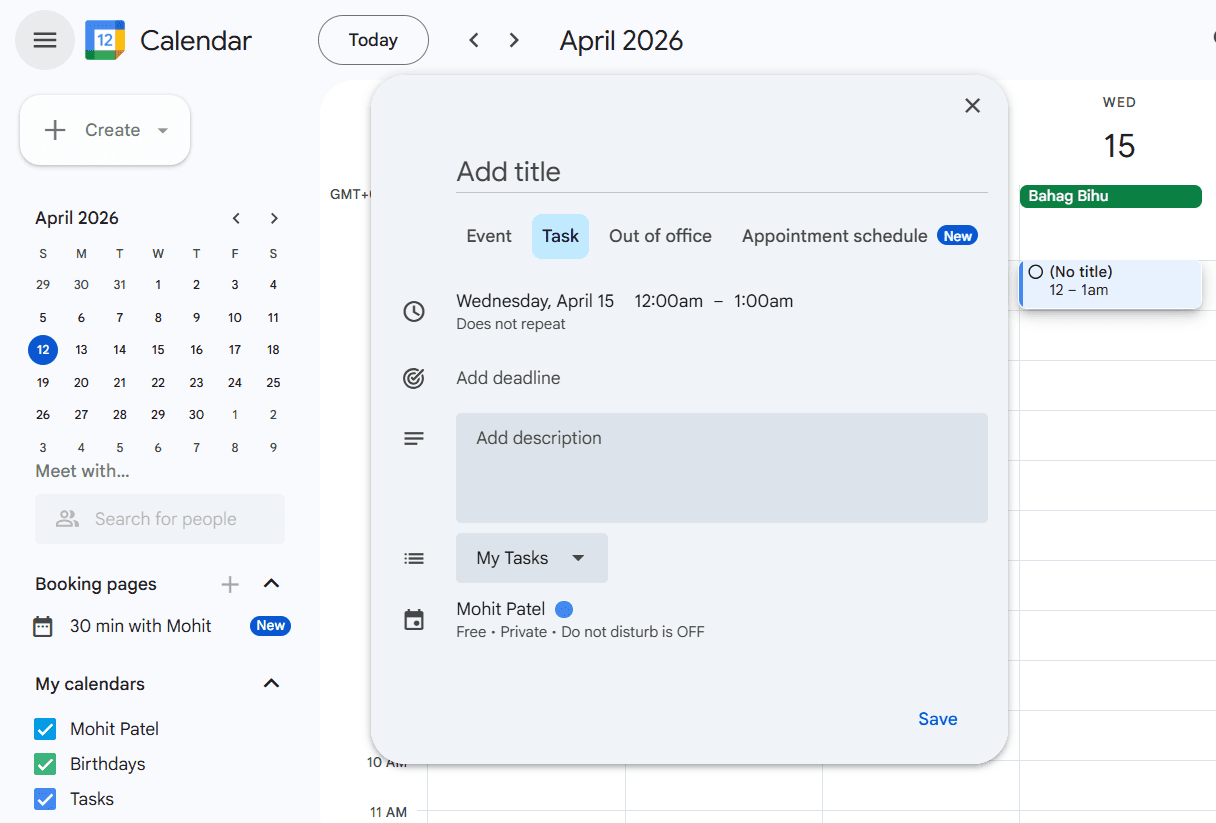
1. Calendar Reminders
Manual to set
Easy to ignore
Not tied to email context
2. Email Templates
Help with writing
Do not ensure timing or consistency
3. CRM Systems
Designed for teams, not individuals
Require setup and maintenance
Often overkill for simple workflows
4. Inbox Productivity Tools
Focus on speed and organization
Do not address follow-up discipline
The result: the underlying problem remains unsolved.
The 3-Rule Follow-Up System
This system is simple on purpose.
It is made for people who work through email every day but do not want to run their life through a heavy CRM.
Rule 1: Assign a Follow-Up to Every Important Email
Do not send an important email and leave it open-ended in your own workflow.
The moment you send it, decide what happens if there is no reply.
That next step can be simple:
Follow up in 2 days
Follow up next week
close the loop after one final message
The point is this: do not leave the decision for later.
Later is where most follow-ups disappear.
This applies to:
client proposals
hiring conversations
partnership outreach
investor emails
freelance leads
warm intros
If the email matters, it needs a plan.
Rule 2: Follow Up at Least Three Times
Many people stop too early.
That is one reason replies get missed. Studies by HubSpot and other sales workflow sources show the same pattern: one message is usually not enough, and reply rates improve when at least one follow-up is added.
Woodpecker reports that average reply rates rise from about 9% on a single email to about 13% when at least one follow-up is included.
For most professional conversations, this simple sequence works:
Day 0: original email
Day 2 or 3: first follow-up
Day 6 or 7: second follow-up
Day 10 to 14: final check-in
That is enough to stay present without becoming annoying.
Not every thread needs all three follow-ups. But many need more than one.
And that is the point.
Recommended Follow-Up Timeline
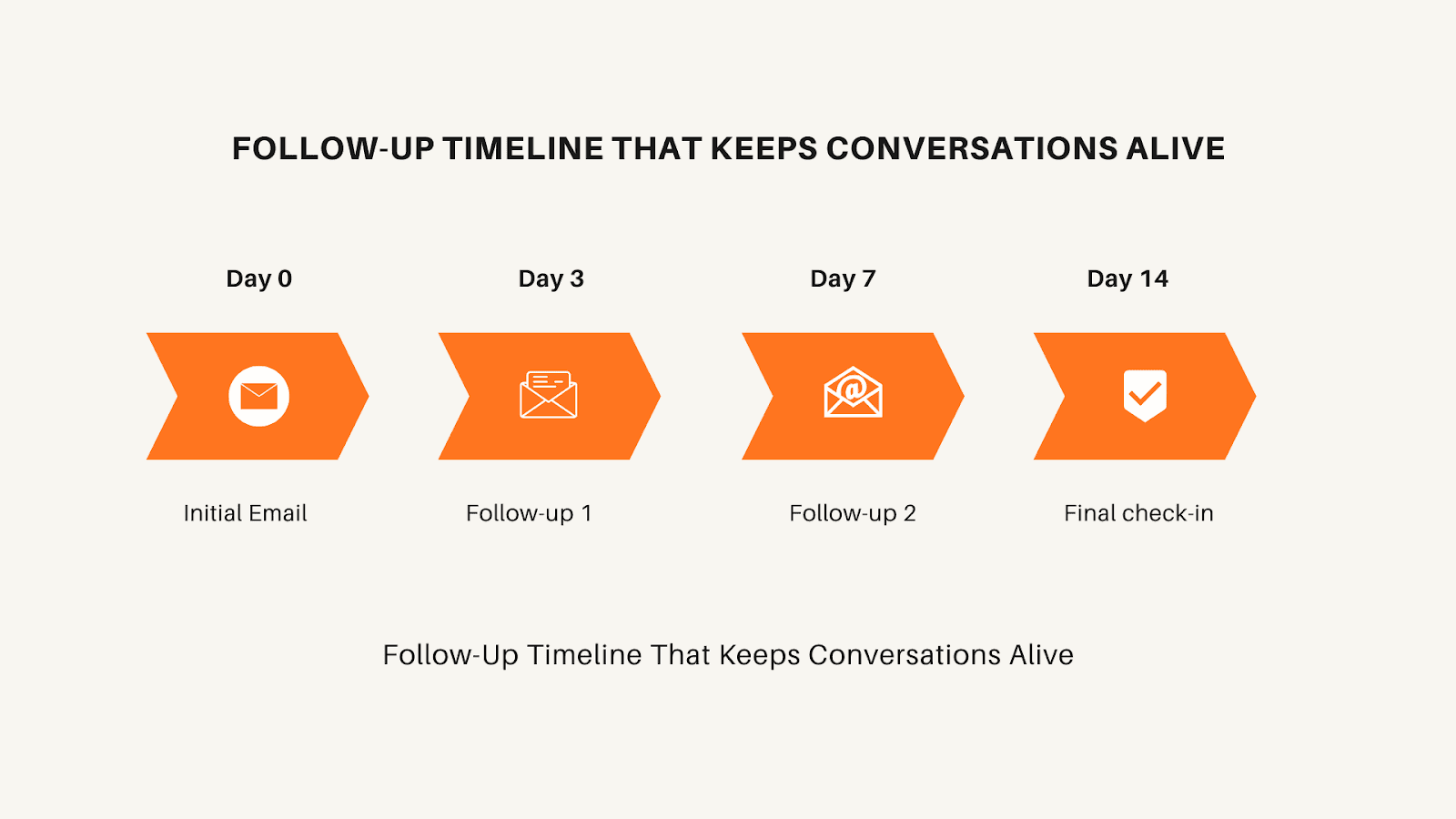
Response likelihood increases with consistent follow-ups, especially when spaced correctly.
Rule 3: Make the follow-up easy to send
A lot of follow-ups die in the drafting stage.
People wait because they think they need the perfect wording. They want to sound polite, sharp, and not too pushy. So they postpone it.
That creates friction. And friction kills consistency.
A good follow-up does not need to be clever. It needs to be clear.
Here are a few examples:
After no reply
Hi [Name], just checking in on this. Let me know what you think when you have a moment.
After a proposal
Hi [Name], I wanted to follow up on the proposal I sent earlier this week. Happy to answer any questions.
After a meeting
Hi [Name], good speaking with you earlier. Just following up on the next steps we discussed.
That is enough.
Short works. Clear works. Sent works.
What changes when you use this system?
If you follow these three rules, a few things start to shift.
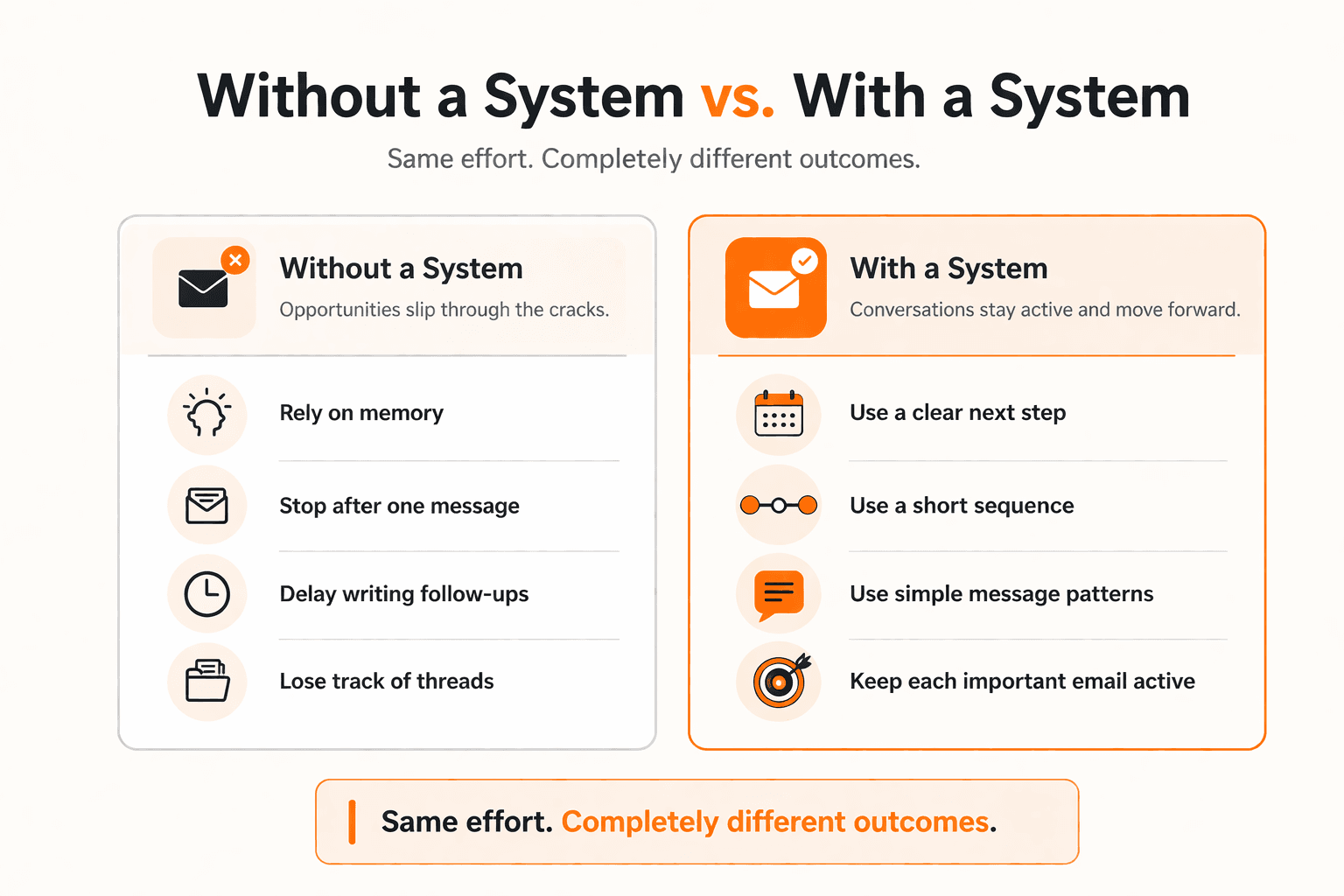
Conversations stay active
fewer opportunities slip away
Replies increase over time
Your pipeline feels more controlled
But the biggest change is simple.
You stop losing things you already worked for.
Where do most people still struggle?
Even with a simple system, people slip.
Because execution is still manual.
You still need to:
Remember which emails need follow-up
Track timing
Revisit threads
Decide what to send
When volume is low, this works.
When the volume increases, it breaks.
This is where most people go back to old habits.
Why does this problem keep coming back?
Email was not built to manage follow-ups.
It was built to send messages.
Once a message is sent:
There is no built-in tracking
No clear follow-up system
No visibility into pending conversations
So everything depends on the user.
That is the limitation.
A more practical way to think about it
Instead of asking:
“How do I write better emails?”
Ask:
“How do I make sure important conversations don’t stop?”
That is the real question.
Where Recaly fits in?
You can run this system manually with a spreadsheet, flags, or calendar reminders.
That is better than doing nothing.
But manual systems usually break in the same places:
You forgot to log the thread
You set reminders for some emails, not all
You lose context when the reminder shows up
You know you should follow up, but you still have to think about what to send
That is where tools start to matter.
Not because people need more software. But because the system should live where the work already happens.
That is also where Recaly fits naturally.
Recaly is built around a simple idea: important email threads should not depend on memory.
Instead of pushing people into a full CRM or a complex workflow, the goal is to help them track follow-ups, surface the right thread at the right time, and reduce the work needed to send the next message.

That is not magic. It is just a better place for the system to live.
A simple checklist you can use today
If you want to apply this without any tools, start here:
Decide the next step for every important email
Don’t stop after one follow-up
Keep follow-ups short
Review your sent emails once a week
Close conversations instead of leaving them open
Even this will make a difference.
Final thought
Most opportunities are not lost in big moments.
They are lost in small gaps.
A missed follow-up.
A delayed message.
A conversation that fades.
A simple system does not fix everything.
But it removes the most avoidable mistakes.
And for most busy professionals, that is enough to change outcomes.
Call to action
If you’ve seen this pattern in your own inbox, it’s worth fixing now.
Start using the 3-rule system this week.
And if you want help managing it without tracking everything manually, you can try Recaly.
It’s built for people who rely on email and don’t want to lose conversations just because they forgot to follow up.